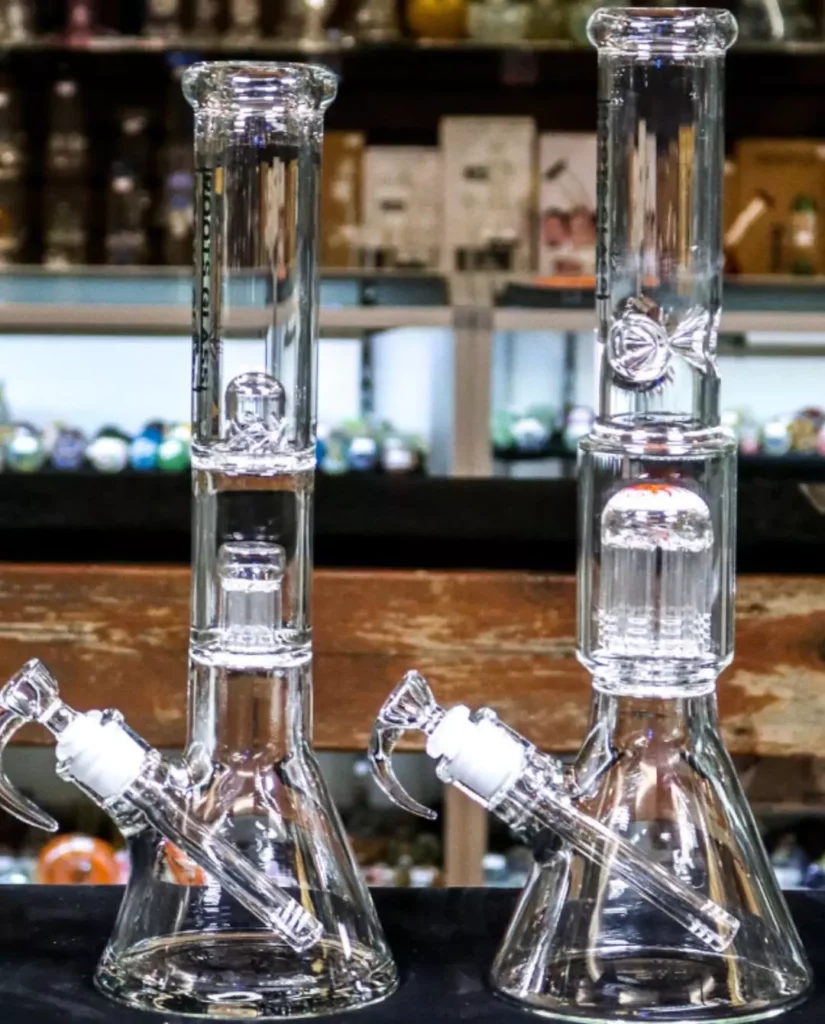
Quick Answer: The spoon pipe to get has a built-in glass screen, like the Roots Glass Screen Spoon Pipe at $24.99. A spoon pipe is a small, dry glass hand pipe with a bowl, a mouthpiece, and a carb hole you cover, then release to clear the smoke. The screen helps keep ash out of your mouth.
A spoon pipe is the classic glass hand pipe — bowl on one end, mouthpiece on the other, small hole on the side. It’s the shape that has outlasted every trend in glass, and there’s a reason for that.
What is a spoon pipe?
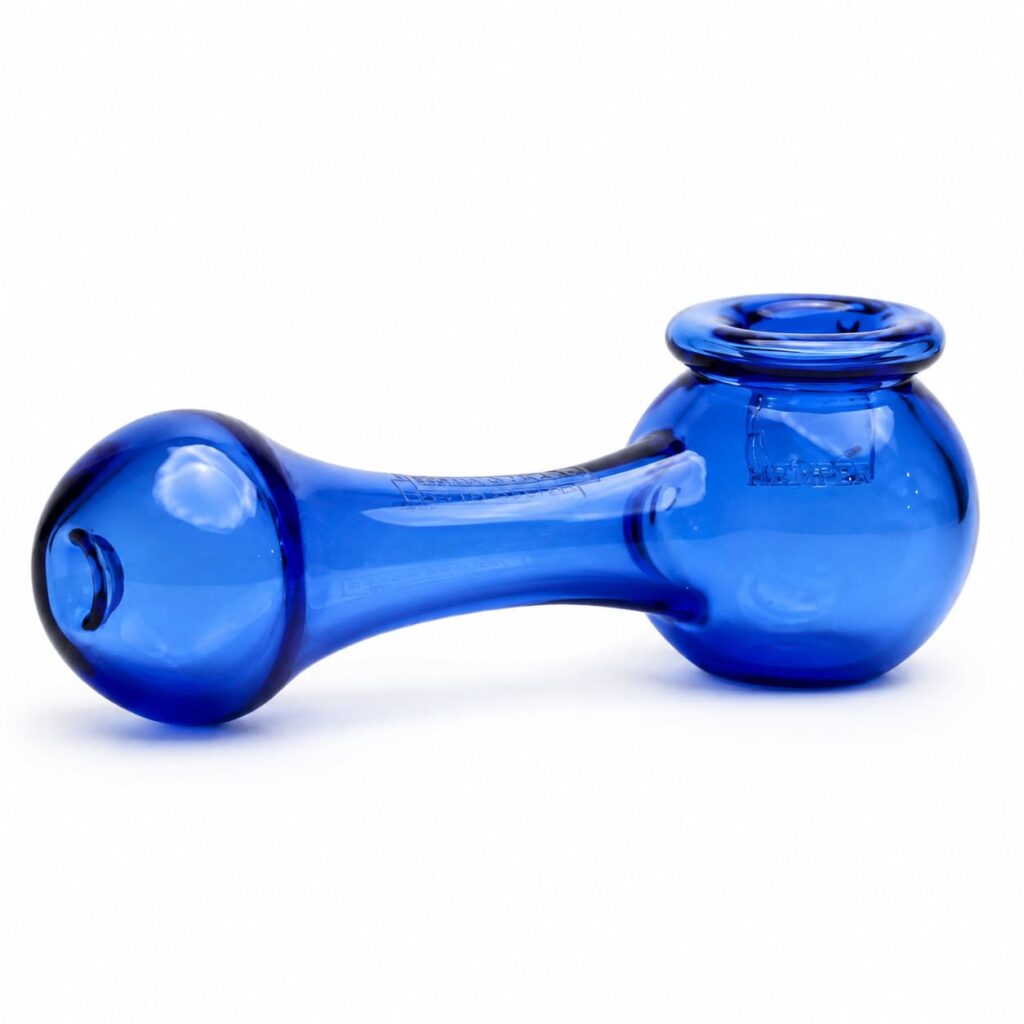
A spoon pipe is a dry hand pipe shaped like its name: a rounded bowl that tapers into a straight neck and a mouthpiece, with a carb hole drilled into the side of the bowl. No water, no downstem, no moving parts. You pack the bowl, light it, and pull. The name describes the silhouette, not the function — Chameleon Glass calls spoons the industry standard for everyday smoking.
Four parts do all the work: the bowl, the neck, the mouthpiece, and the carb. That’s the whole thing. A typical glass spoon runs around four inches long — GRAV lists their classic spoon at exactly 4 inches of borosilicate — which is short enough to disappear into a jacket pocket and long enough that the smoke isn’t arriving at your mouth straight off the ember.
Roots Glass Spoon Pipes
-

Roots Glass Screen Spoon Pipe
Original price was: $34.99.$24.99Current price is: $24.99. -
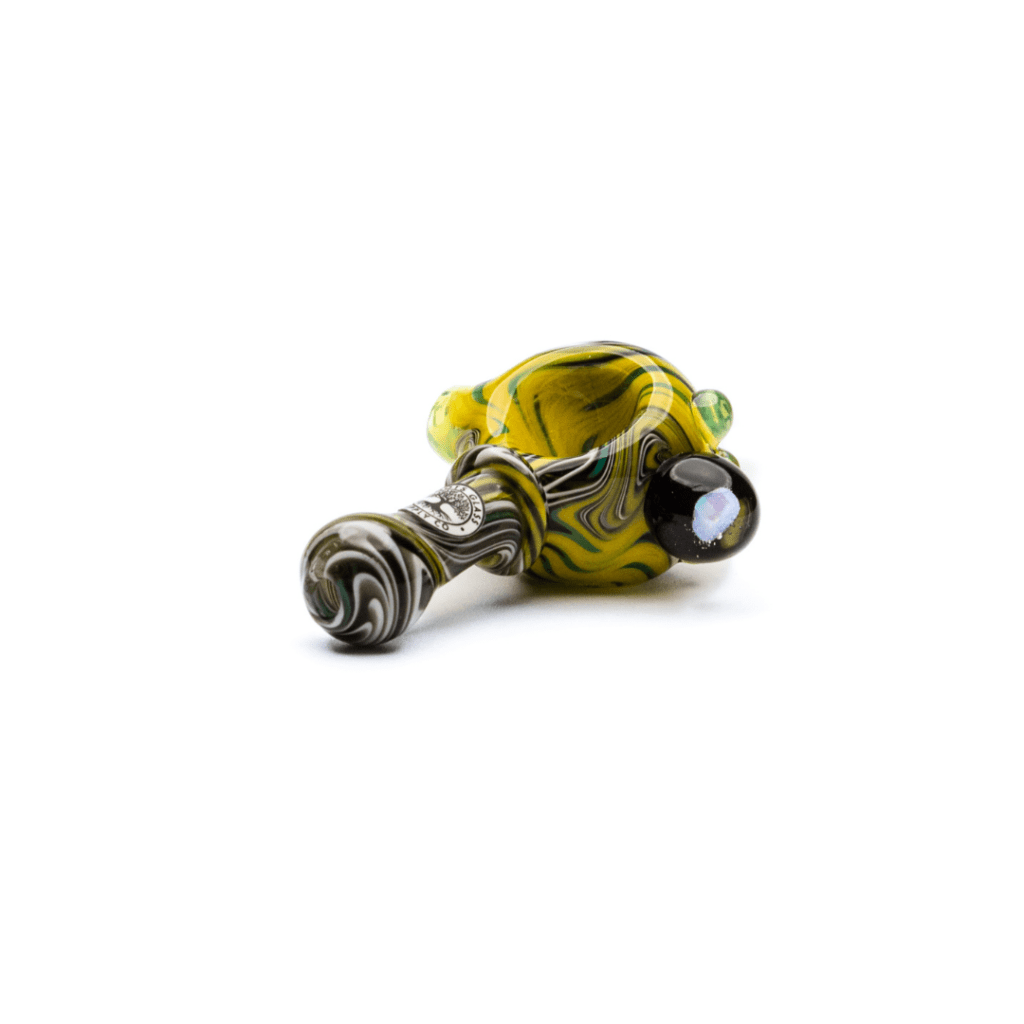
Roots Glass Mini Spoon w/ Opal
Original price was: $39.99.$29.99Current price is: $29.99. -
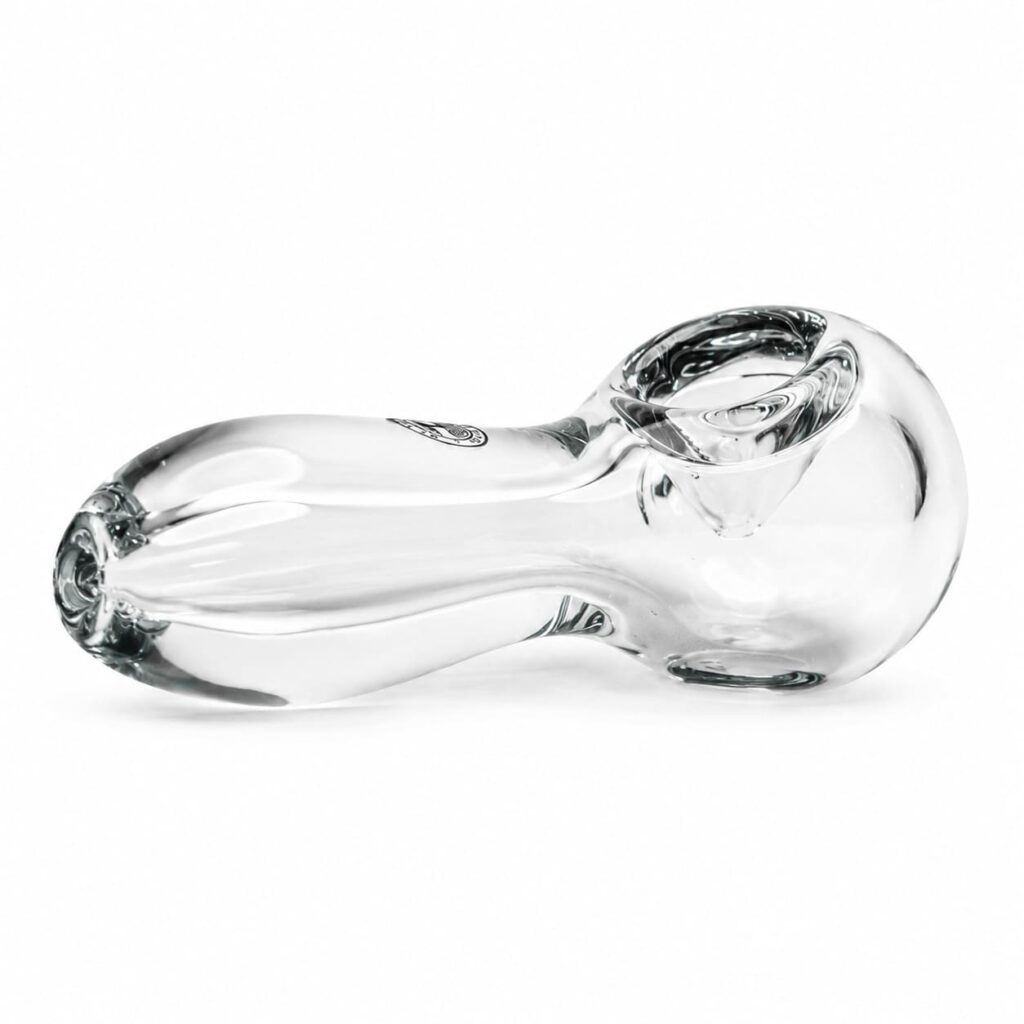
Roots Glass 5″ “THICK BOY” Hand Pipe
$34.99


How does the carb hole actually work?
The carb hole is the entire mechanism, and it’s the part that takes practice. Cover it with your thumb while you light and draw, and the pipe fills with smoke. Lift your thumb and fresh air rushes in through that hole, pushing the whole chamber into your lungs in one clean pull. That’s it — no water to change, no perc to clean, no downstem to break.
Covering the carb the entire time is a common mistake. You get a slow, stale drag and half the bowl stays in the neck. Release it about three-quarters of the way through the pull, not at the very end.
The other thing the carb does is give you control over how much you take. Short pull, quick clear, done. A glass bong clears the same way, except you pull the bowl out instead of lifting your thumb.
What should you look for when buying a spoon pipe?
Wall thickness, a real carb, and a built-in screen are the three things that separate a spoon pipe you keep from one you replace in a month. Everything else — color, pattern, fume work — is taste, and taste is fine. It just isn’t function.
Thin glass is why cheap spoons die young. A pipe that lives in a pocket gets dropped, and thin glass can’t take normal handling, let alone a tile floor. Borosilicate also takes sudden heat better than soft glass, which matters because you put a flame to the bowl every session.
The screen question is the one worth thinking about. Without a screen, ash and small bits get pulled straight through the neck and into your mouth. The usual fix is a little steel mesh screen you push into the bowl, and it works, until it clogs or falls out. A glass screen built into the bottom of the bowl does the same job as part of the pipe itself, so there’s nothing to push in, lose, or replace.
| What to check | Skip it | Buy it | Why it matters |
|---|---|---|---|
| Glass | Thin soft glass | Thick borosilicate | Survives pockets and repeated heat |
| Screen | Open bowl hole | Built-in glass screen | Holds ash back with no loose screen to lose |
| Carb | Tiny or ragged hole | Clean hole your thumb covers fully | Controls the clear; a bad carb means a stale pull |
| Bowl depth | Shallow dish | Deep enough to hold a full pack | Fewer reloads per session |
| Neck length | Very short | Around 4 to 5 inches overall | Gives the smoke room to cool before it lands |
| Mouthpiece | Sharp cut rim | Rounded, flame-polished | You have this against your lip every session |

Spoon pipe vs bubbler vs one hitter — which one fits you?
Pick a spoon pipe if you want the simplest thing that works, a bubbler if you want water filtration in a pocket size, and a one hitter if you want the smallest possible dose. They solve three different problems, so comparing them on price alone is how you end up with the wrong one.
A bubbler runs the smoke through a water chamber that a spoon doesn’t have, and 420 Science points out that a typical bubbler is fiddlier to clean. You get a cooler, smoother pull. You also get water to change and a chamber to scrub. Our glass bubbler guide goes deeper if that trade sounds worth it to you.
A one hitter does the opposite: one small dose, minimal smell, nothing to clear. It’s a discretion tool more than a session piece.
The spoon pipe sits between them, and that middle is exactly why it has never gone away. If you want the wider view of how all these shapes relate, our glass pipe guide covers the full family, and the rest of the shapes we make live under hand pipes.
How do you pack and hit a spoon pipe?
Grind medium, pack loose at the bottom and firmer at the top, cover the carb, light the edge of the bowl — not the middle. Lighting the center torches your whole pack on the first hit and leaves you with a bowl of ash. Corner it: touch the flame to one edge, and the rest stays green for the next pull.
Pack it like this:
- Break the flower up by hand or with a grinder. Too fine and it packs into a plug that won’t draw, and the dust pulls straight through the screen; too coarse and it burns unevenly and won’t stay lit.
- Drop a loose pinch in first so air can still move.
- Press the top layer lightly with a fingertip. It should hold shape but still give.
- Cover the carb with your thumb, hold the flame just off the edge of the bowl, and draw slowly.
- Release the carb about three-quarters through and finish the pull.
If you’re pulling ash through even with a screen, your grind is too fine. That’s usually the fix.
How do you clean a spoon pipe without wrecking it?
Isopropyl alcohol and coarse salt in a sealed bag, twenty minutes of soak, then shake — that’s the whole method, and it costs next to nothing. The salt is the abrasive; the alcohol dissolves the resin. Neither one works nearly as well alone.
Run it like this: drop the spoon pipe in a zip bag, cover with 91% or 99% isopropyl, add a heavy spoonful of coarse salt, seal it, and let it sit. Come back and shake for thirty seconds. Most of the buildup will already be off the walls. Pipe cleaners get the neck and the carb hole. Then rinse under hot water — properly, more than you think — and let it dry fully before the next session.
Two things to avoid. Don’t take a cold pipe straight into hot water; thermal shock cracks glass, and a spoon that just came off a windowsill in winter is cold. And don’t dig at stubborn resin with anything metal. Soak it longer instead. Our cleaning a bong walkthrough uses the same alcohol-and-salt approach at a larger scale if you want the long version.
Is a spoon pipe still worth buying?
Yes — a spoon pipe does the whole job with no parts to fail and nothing to change between sessions, and nothing newer has made it obsolete. Ours run $24.99 to $34.99, and the shape has stuck around because it works.
Where a spoon pipe is the wrong call: if you want the smoothest possible pull, water wins and you should be looking at a bubbler or a bong. If harshness bothers you more than convenience does, don’t buy a dry pipe and then be disappointed that it’s dry.
Why Spoon Pipe Guides Get This Wrong
A lot of spoon pipe pages rank on looks and price, then treat the screen as an afterthought or skip it entirely. It’s backwards. Color work is the thing you notice in a photo; the screen is the thing you notice every single session, because without one you are eventually going to pull ash into your mouth. If a guide spends four paragraphs on fume patterns and one line on how the bowl is drilled, it’s describing the photo, not the pipe.
Other Hand Pipe Shapes Worth a Look
-

Roots Glass Sherlock Pipe
Original price was: $34.99.$24.99Current price is: $24.99. -
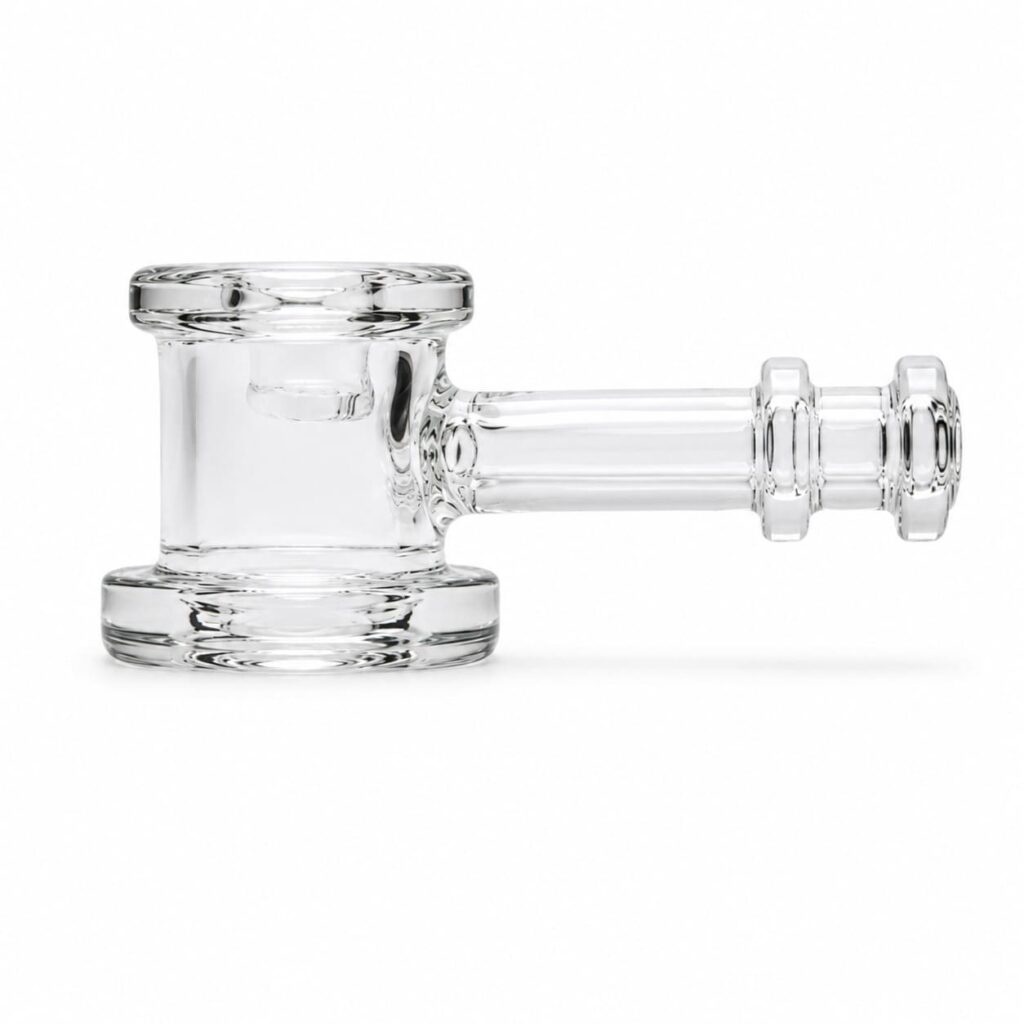
Roots Glass 4.5″ “THICK BOY” Screen Hammer Hand Pipe
$34.99 -
Roots Glass 5″ Screen Bubble Hand Pipe
$29.99 -

Roots Glass Wig Wag Onie Pipe
$29.99


Frequently Asked Questions
What is a spoon pipe used for?
A spoon pipe is a dry hand pipe used for smoking flower. You pack the bowl, cover the carb hole with your thumb, light the edge of the bowl, then release the carb to clear the smoke. It needs no water, no downstem and no extra parts, which is why it’s the classic hand pipe shape.
What is the difference between a spoon pipe and a bowl?
A bowl is a part; a spoon pipe is the whole piece. On a spoon pipe the bowl is built into the glass: it’s the rounded end you pack, with the carb hole on its side. A bong bowl is a separate glass piece that holds flower, seats in the bong’s downstem (or straight into the joint on a stemless bong), and pulls out so you can clear the chamber. When someone calls a hand pipe a bowl, they mean the whole pipe.
Are spoon pipes good for beginners?
Yes. A spoon pipe has four parts and one moving idea — the carb hole — so there’s very little to learn or break. Two mistakes to watch for: holding the carb covered for the whole pull, and lighting the middle of the bowl instead of the edge.
How do you clean a spoon pipe?
Put the pipe in a sealed bag with 91% or 99% isopropyl alcohol and a heavy spoonful of coarse salt. Soak about 20 minutes, shake for 30 seconds, use pipe cleaners on the neck and carb, then rinse thoroughly with hot water and dry fully. Never put a cold pipe straight into hot water — thermal shock cracks glass.
Written by Jared Horvath, founder of Roots Glass Supply Co. We design thick borosilicate glass for people who smoke every day — built by smokers, for smokers. Every product reviewed here we’ve handled ourselves, often for months. Shop the full lineup at rootsglass.com. Follow along on Instagram or Facebook.
Works Cited
- MÜV — What is a Spoon Pipe and How Does It Work? muvfl.com/learn/cannabis-hardware/spoon-pipe
- DankStop — Spoons collection (pipe anatomy: mouthpiece, bowl, neck, carb) dankstop.com/collections/spoons
- Chameleon Glass — Spoon shaped glass pipes chameleonglass.com/product-category/pipes/hand-pipe/spoon/
- 420 Science — What is a Bubbler? Bubblers vs. Pipes 420science.com/blogs/news/why-bubbler-pipes-are-amazing
- GRAV — Classic Spoon product listing (4 in, borosilicate) grav.com/products/4-grav-spoon-1